



 თებერვალი 16, 2024
 07:56 AM
Disinformation as Power Propaganda Weapon and Ways to Fight It
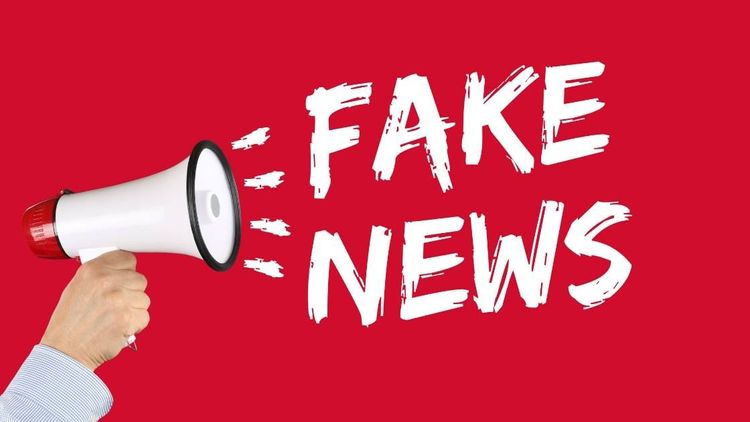
The activation of social media in the Internet age has further increased the information field. If we were looking for information a few years ago, today it “finds” us. The threat of forming an information-tired society is becoming increasingly real in the age of information surplus. It is difficult to determine which information is valid and relevant among the many and uncontrolled information streams.
Since information is a powerful tool, it is entirely possible to use it for a mercantile or narrow political interest. Dissemination of misinformation and misleading the public creates an enchanted circle in which people “infected” with fake, pseudo, unreal information, “infect” others by the effect of the virus and lies soon become widespread. It should be noted that misinformation has a negative impact not only on the ongoing processes in a particular region, but also on the international agenda.
We offer an extensive interview with Nino Narimanishvili, Editor-in-Chief of CIU Multimedia Center Media Critics Platform MediaChecker, on the causes and expected consequences of spreading fake news, as well as the dangers of misinformation and the ways to eliminate it.
According to Nino Narimanishvili, spreading fake news can have an economic and political purpose: on the one hand, the broadcaster in this way increases the rating of its platform and receives economic benefits, and on the other hand, spreads the desired message. Our respondent also explains the reasons for the rapid spread of fake news - it can be a manipulation on people’s emotions, audience prejudices and a form of viral/aggressive spread.
Varieties of Fake News
The following are distinguished: disinformation, misinformation and malinformation. All of them are fake news, though the purpose of their spread is different. Disinformation, this is a fake story that serves to popularize the source of information, or to pursue a policy defined by a particular group; Misinformation differs from disinformation in that its purpose is not to harm anyone or anything; Malinformation, unlike the previous two, is Fake News that may be based on a fact, but it is spread deliberately and used to discredit a person, group or institution, in order to harm them.
Disinformation as a Commercially Profitable Means and Its Negative Impact on Regional and International Level
Disinformation is commercially profitable in the sense that in the age of technology and algorithms, the higher the number of visitors to a site, the greater the possibility of activating monetization. Much more dangerous than commercially profitable disinformation is the information which is driven by political motivation, I mean the motive of harming someone or something.
Deliberately misleading people, regardless of the topic, is very dangerous, unfair and unprofessional. Not to mention commercialization, we live in an era of hybrid warfare, and war is always dangerous. The current events have clearly shown the very negative consequences of this war: since the spread of the virus, the disinformation flow has increased somewhat and it has even been called “infodemic”.
The Main Means of Disseminating Disinformation
Me, as a journalist interested in media literacy and fake news, I observe that fake news is most often and quickly spread through various social networks. For example, there are numerous pages and groups on Facebook that are deliberately designed to spread fake and manipulative information. You may even remember that Facebook has deleted hundreds of such pages recently.
Besides Facebook, fighting fake news has become a priority for other networks as well. Moreover, Twitter has launched a new pilot project called Birdwatch, which, unlike other programs, allows users to mark fake news and attach a verification result as a note.
Fake news, though not as common as in case of social media, is also spread through traditional media. Here the pace and access to the audience is somewhat different. Therefore, for the most part, new media, websites, social networks are used for this, as fake news spreads rapidly and on a large scale through these channels. What is especially bad, a fake story always reaches a much larger audience than the same story already verified.
Georgian Media Space and Disinformation
Unfortunately, part of Georgian media space was also quite saturated with fake and manipulative news. Especially different sites the information about which is not transparent. Responsible and conscientious means of media try to ensure that their information is always verified.
The most common fake news that has been circulating lately is related to the pandemic and this hysteria started exactly one year ago. These are the stories that mainly refer to the origin of the virus. At first there were rumors that this virus did not actually exist, then a number of conspiracy theories have been developed regarding the origin of the virus. Also, at the beginning of the pandemic, information about folk methods of protection against the virus was often spread, including medicines.
Identifying Signs of Disinformation/False News
In fact, it is very easy to detect a fake story and it is not necessary for a fake investigative journalist to be was a fact checker.
The first thing that we do in that case is to observe the title. Headlines of fake news, as a rule, target people’s emotions, they are eye-catching, use exclamation marks, words like – “urgently”, etc.
Also, we need to look closely at the source of the information - who is disseminating it, how transparent the information about it is, since fake news sites and groups do not identify themselves, their mission, their editorial team, and so on. Also, there are cloned pages of well-known means of media and therefore, we should pay close attention to the link. This is a kind of strategy of the spreaders of fake news - in order to highly legitimize the message, to use the well-known and credible media.
Observing photos - Fake storytellers often manipulate with photos: falsifying photos with different programs, using authentic photos to describe other realities, using photos from different angles ... Also, recently not only photos but also fake video, so called Deepfake has become one of the tools in the disinformation war.
Date very often indicates to a fake story - sometimes we share various information without checking the date of its publication.
We have to look at the text - what sources does the author rely on, are there many anonymous sources, or general phrases - e.g., according to the conclusion made by British scientists, etc.
To conclude, in order to identify fake news, we need to look at the following identifying signs:
Observing the title;
Source of Information;
Verifying dates;
Checking photo/video;
Observing – sources used by the author;
If the author is listed, find out more about that author.
Nino Narimanishvili, the editor of MediaChecker, considers media literacy to be the main tool in the fight against disinformation, as it teaches us how to read/receive information that comes to us, when to be skeptical.
Disinformation has always been one of the most powerful means of propaganda and will continue to be so in the future. The main thing that protects us from pseudo-information flows is our own skills – to be able to distinguish between fake and true news.
Soso Gazdeliani
Other News
- სექტემბერი 16, 202409:45 AM
Why should you choose CIU Undergraduate Program in Journalism?
The Undergraduate Program in Journalism at Caucasus International University has been implemented at the Faculty of Social Sciences since 2012-2013 academic year. The program is distinguished by practice-oriented teaching. Students have the opportunity to master all the practical or theoretical aspects of modern journalism.
- აპრილი 15, 202209:41 AM
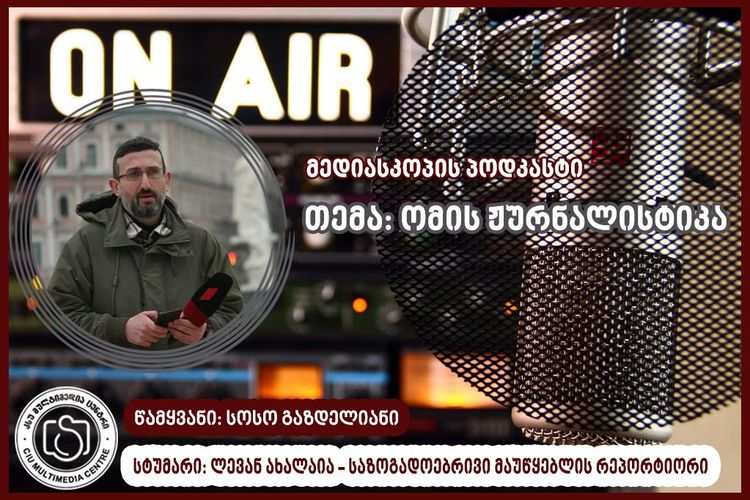
MEDIASCOPE - WAR REPORTING
- თებერვალი 28, 202209:36 AM
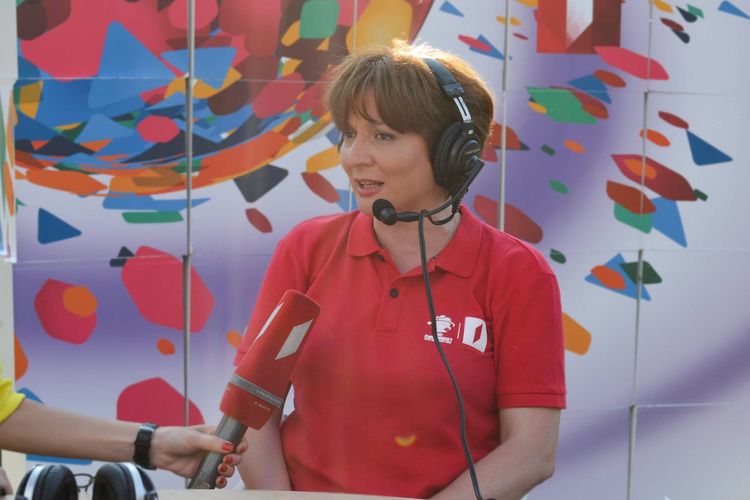
Sports Journalism as a Popular Field of Modern Media
Sports journalism had only a recreational function for some time. However, this approach has changed over time and today it occupies one of the most important places in the hierarchy of forms of journalism.